
EFT Book Recommendations
Recommended literature on Emotionally Focused Couples, Individual, and Family Therapy.
Emotionally Focused Therapy (EFT) has produced a wealth of well-founded professional literature over the past few decades. Whether you are a couple looking to deepen your relationship, a therapist seeking to enrich your practice, or interested in individual and family therapy – here you will find the most important and influential books on EFT, carefully selected by Ben Kneubühler.
The works of Sue Johnson, the founder of EFT, form the heart of this collection. They are complemented by practical workbooks and specialized professional literature, available in both German and English.
Jump to the right category:
- For Couples – Books for strengthening your own relationship
- For Couples Therapists – Professional literature on EFT practice
- For Individual & Family Therapists – EFIT and EFFT literature
Book Recommendations for Couples

Hold Me Tight
Love is all about emotional connection. We all seek another person we can rely on, a loved one who can consistently provide us with emotional closeness. Susan Johnson arrived at this insight when she developed a new approach to couples therapy in collaboration with Leslie Greenberg: Emotionally Focused Therapy (EFT). The message of EFT is very simple: No one needs to learn to argue and negotiate better, nor is it necessary to analyze early childhood or prove something to your partner through grand romantic gestures. What matters is acknowledging the emotional bond.
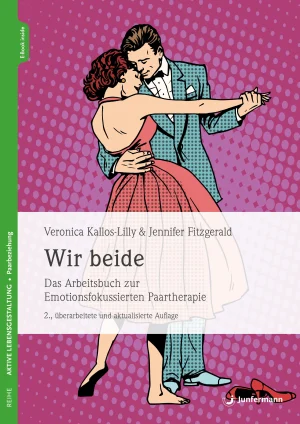
An Emotionally Focused Workbook for Couples
Veronica Kallos-Lilly and Jennifer Fitzgerald introduce the principles of EFT in this workbook and show ways couples can work with it. Various factors of a relationship are explained. It includes exercises and questionnaires as well as practical examples to quickly and effectively build a bridge to your own everyday (love) life.
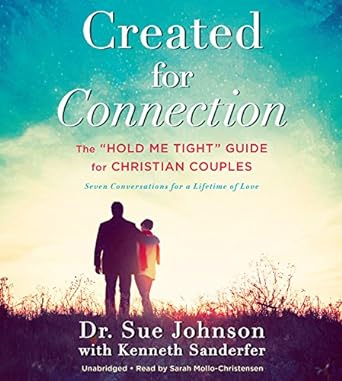
Created for Connection – Hold Me Tight for Christian Couples
For Christians, God is a fortress, a refuge, and a source of strength (Psalms). In this book, Sue Johnson has adapted her seminal work Hold Me Tight for Christian couples. The recognition of vulnerability and the need to turn to others for support has always been part of Christian teaching. Society teaches us that relying on others is a weakness and that it is somehow shameful when adults “need” others. But it is clear from Scripture and science that a sense of connection with a loved one, as with God, gives us a safe haven and the courage to face the world.
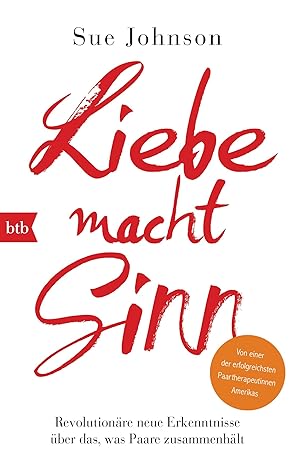
Love Sense: The Revolutionary New Science of Romantic Relationships
In a time when divorce rates are rising, the desire for a functioning and heartfelt relationship is also growing. But the question arises: Are we humans really made for the everlasting love that so many dream of? Sue Johnson emphatically affirms this in her book “Love Sense.” She points to groundbreaking new studies that share one thing in common: They show that we humans are fundamentally inclined toward monogamy and attachment. A lasting, loving partnership is not only possible but also achievable.
Book Recommendations for Couples Therapists
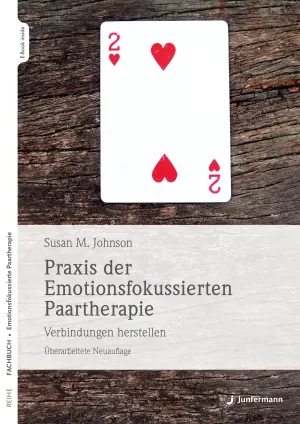
The Practice of Emotionally Focused Couple Therapy
No couples therapist has to accept that the effort to revitalize a love relationship is a nebulous process with an uncertain outcome. There are now empirically validated patterns of marital problems and descriptions of how adult attachments work. As one of the best documented, most plausible, and most thoroughly researched couples therapy approaches, Emotionally Focused Couple Therapy (EFCT) is an extremely effective relationship therapy. This book is suitable for both trainees and practicing therapists.
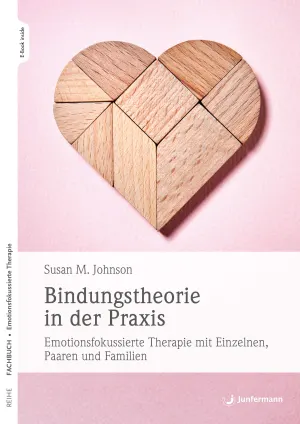
Attachment Theory in Practice
Emotionally Focused Therapy with Individuals, Couples, and Families
Attachment and Emotionally Focused Therapy – The fundamental need in interpersonal relationships is secure emotional connection. It is therefore not surprising that Bowlby’s attachment theory and Emotionally Focused Therapy (EFT) have long been mutually enriching in order to promote the social fabric of clients. In this book, Sue Johnson, the founder of Emotionally Focused Therapy, presents both concepts for the first time explicitly as complementary approaches.
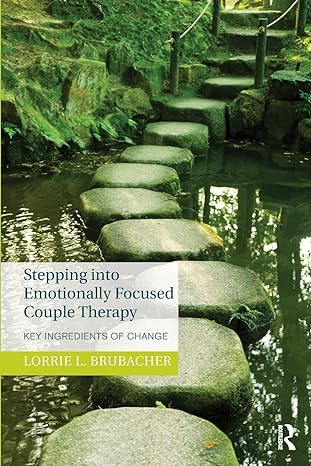
Stepping into Emotionally Focused Couple Therapy: Key Ingredients of Change
In this book, every step and phase of EFT is described in a practical and theoretically straightforward manner. It clearly illustrates what experiential therapy is. Examples are provided on how to emotionally engage clients and how to foster emotional engagement between partners.
Book Recommendations for Individual & Family Therapy
Emotionally Focused Individual Therapy (EFIT)
Fostering individual growth – Emotionally Focused Therapy is widely recognized as a groundbreaking and scientifically supported intervention for couples. However, it is also frequently applied in individual therapy, particularly in the treatment of depression, anxiety, or trauma-related disorders. This book offers therapists a practice-oriented introduction to Emotionally Focused Individual Therapy (EFIT).
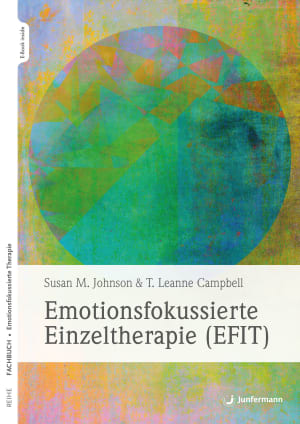
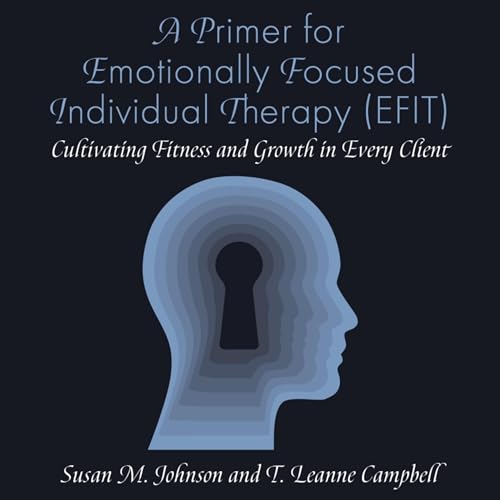
A Primer for Emotionally Focused Individual Therapy (EFIT)
This book is a central guide for the application of Emotionally Focused Therapy (EFT) with individuals. Supported by clinical exercises, case studies, and transcripts, it illustrates the application of the model in practice, emphasizing the unique benefits of EFT as a transdiagnostic approach for treating emotional disorders. Suitable for therapists of all experience levels, the book aims not only to alleviate symptoms but also to promote clients’ emotional balance and self-understanding.
Emotionally Focused Family Therapy
For a stable and secure family environment, it is crucial to understand the lifelong changes within family dynamics. Roles and influences within the family are constantly evolving. Emotional withdrawal and disruptions in the family can often cause psychological problems.
Emotionally Focused Family Therapy (EFFT), based on the latest findings in attachment research, aims to support children’s growth and overcome obstacles in relationships. It uses systemic approaches, focusing on children’s attachment needs and parents’ caregiving behavior.

Learn more about What is EFT? or about EFT Training in Switzerland.

